
Building Tikiri for Android: It Is Almost Here
Tikiri launched this past weekend, and the most common question already landed in my inbox. "Android version when?" The short answer: soon. Here is the longer one.
Tikiri came together over about a month of building, and I made it for iOS first. There was a reason for that. I am an iPhone user myself, so I could test the app and fix it right in my pocket every day. That made the early work faster. I also pictured most of my users as people outside Sri Lanka, parents teaching their kids some Sinhala, or grown ups wanting to reconnect with the language. In my head, a lot of them were on iPhones too, so building for iOS felt like the natural first step.
But that was only half the story.
You asked for Android
The app had barely been out a day when the messages and comments started. Different people, same question. "When is the Android version coming?" It was not a flood, but it was steady enough to make me stop and think.
The numbers backed you up. In Sri Lanka, Android runs on about 94% phones, with iOS at around 6%. Worldwide it is about 72% Android. So by building for iPhone first, I had reached only a small slice of the people who might actually want Tikiri. Once I saw that clearly, Android stopped being a "maybe later" and became a bigger task item.
What took the longest
I wanted the Android app to feel the same as the iPhone one. Same smooth taps, same little touches, so that Tikiri feels like Tikiri no matter which phone you have.
There are shortcuts a developer can take to build one app that runs on both phones at once. I tried that route. But when I did, the app lost some of the small details I had grown to love, the kind of polish most people never notice on purpose but would miss if it were gone. I did not want to settle for that. So I chose the slower path and rebuilt the Android version to match, piece by piece. More work, but worth it.
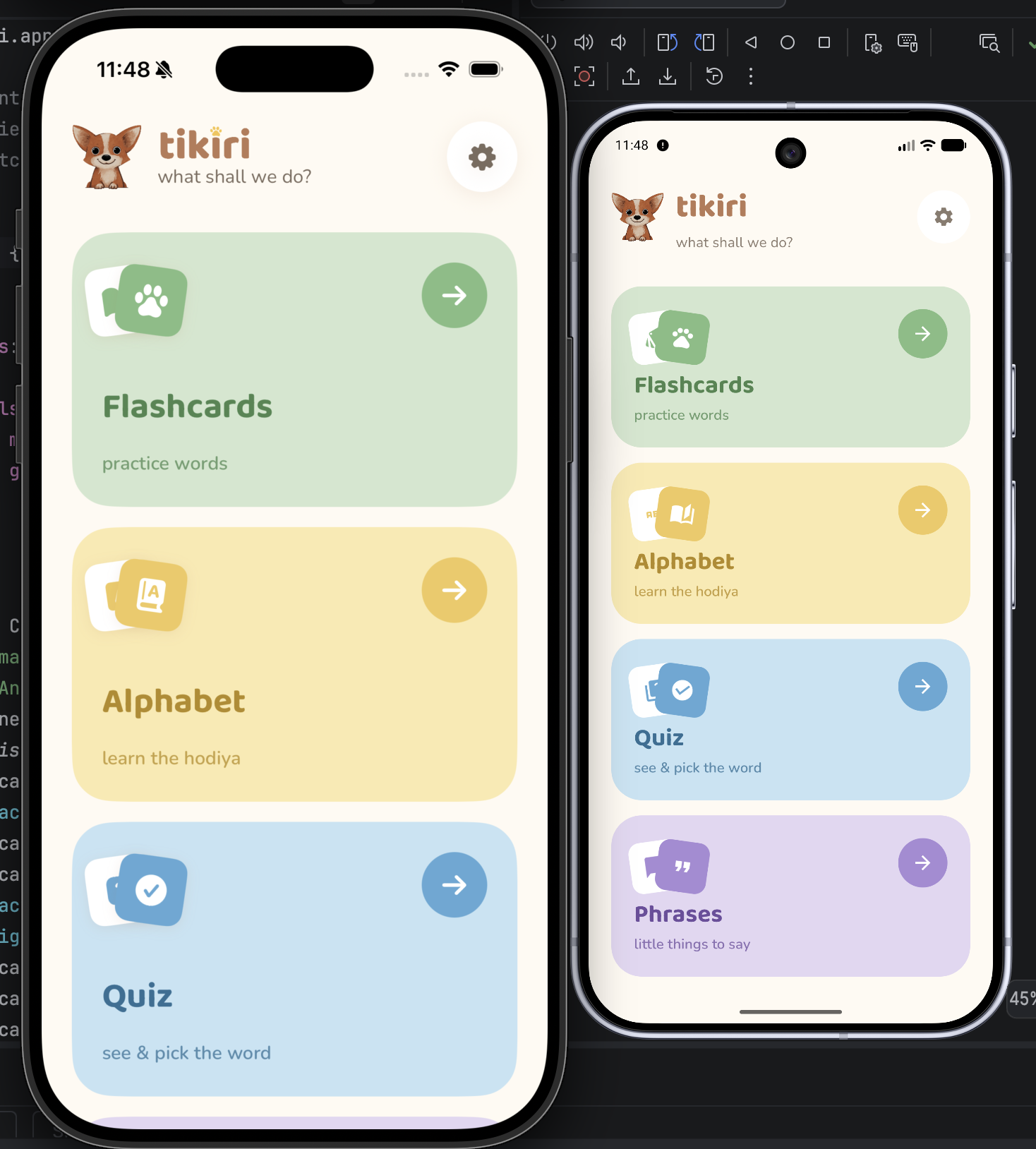
Early stage hub views on both ios and android. You can clearly see the differences in sizing and UI elements. Most of those have been tweaked to match the ios version look and feel at this point.
The surprise hurdle
The hardest part was not the code. To publish on Android, Google asked me to prove I own a real Android device:
"Verify that you have access to an Android mobile device."
I do not own one. I am an iPhone user, remember? So the platform I was building for now needs me to prove I have a phone I do not have. It is a small thing on paper, but it stopped me in my tracks. That is the last piece I am sorting out now.
What happens next
The app is nearly finished. The only thing left is that final setup on Google's side, and then it is in your hands.
You asked for Android, you were right to ask, and it is coming. Thank you for the patience and the gentle nudges along the way.
Rakitha
